Draftsman vs. Architect: How We Chose (and What We Learned)
One of the first major decisions in building a home happens before a single board is cut: Who draws the plans? For us, it came down to choosing between two paths—working with a draftsman or hiring an architect. Both can get you to a high quality finished set of plans. The experience, cost, and outcome can look very different. Here’s how we thought about it—and why we chose the route we did.
Where We Started
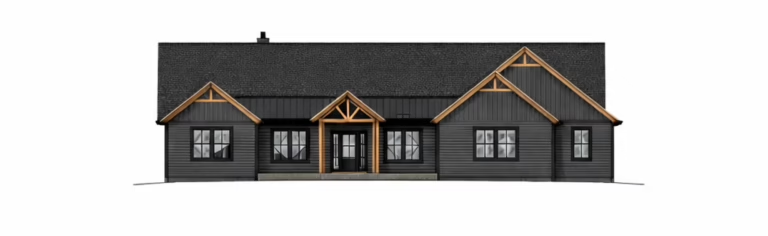
We didn’t begin from scratch. Like most people, we started with bones from a plan we found and liked. It had the right general feel, a layout that mostly worked, and enough detail to imagine living in it. But “mostly worked” isn’t enough when you’re building a home from the ground up. So we treated that plan as a starting point—not a solution.
From there, we partnered with a draftsman who works closely with our builder—a carpenter who knows the area, understands how homes actually come together, and will be hands-on during our build. That relationship shaped everything.
The Path We Took (and What It Really Looked Like)
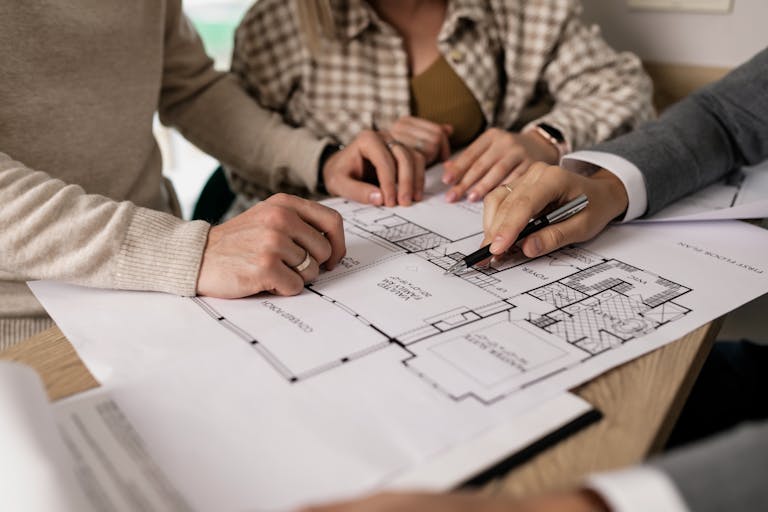
We went through three full rounds of revisions – that's what the draftsman included in the initial cost. At one point—after investing time and energy into a version we thought was close—we scrapped it entirely and started over. Not because it was bad, but because I woke up one morning, looked at it and my gut just said it wasn’t right. That reset turned out to be one of the best decisions we made.
In total, the process took about three months. Longer than expected, but in hindsight, exactly as long as it needed.
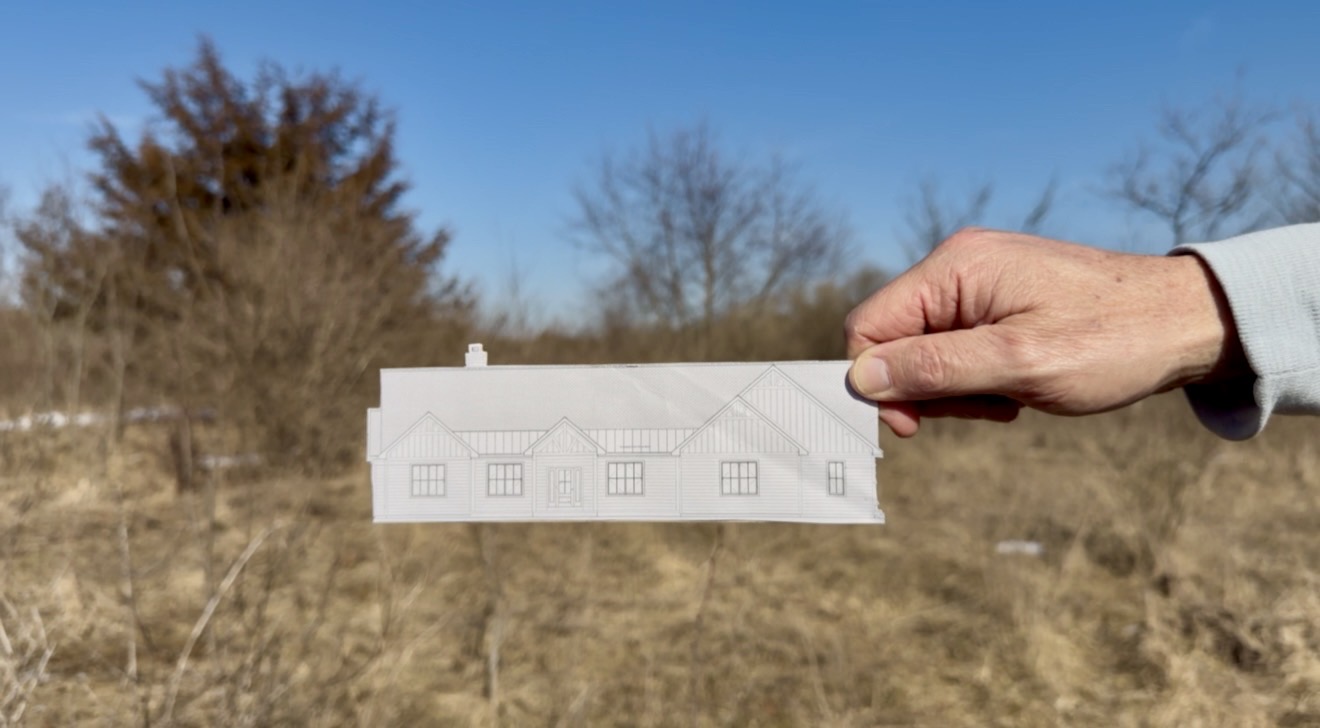
By the end, we had something very different from where we started: A plan that fits how we actually want to live—not just a home looks good on paper.
Why We Chose a Draftsman
For our project, a draftsman made sense for a few key reasons.
1. Cost Efficiency
Our plans came in at roughly $0.17 per square foot. That’s significantly lower than what most architects charge, especially for fully custom work. If you’re balancing a full build budget like us and trying to keep costs as low as possible, that difference matters. (Retirement is not THAT far away so every penny counts!)
2. Builder Alignment
Our draftsman works directly with our builder. That meant:
- Fewer translation gaps between design and execution
- Practical input on what actually works in construction
- An understanding of how design can translate to affordability
- Faster iteration when changes are needed
The plans weren’t created in isolation—they were shaped alongside the person building the house.
3. Flexibility in Iteration
Because we started with an existing plan, we weren’t looking for a ground-up conceptual design. We needed someone who could:
- Modify layouts
- Adjust dimensions
- Refine flow and function
A draftsman was well-suited for that kind of work.
Where a Draftsman Has Limits
This is where the conversation needs to stay honest. A draftsman executes and refines—but they typically aren’t leading with big-picture design vision in the same way an architect does. That means:
- Less emphasis on architectural theory or innovation
- Fewer highly custom or complex design solutions
- More reliance on you (and your builder) to guide the vision
For us, that tradeoff worked. For others, it might not.
When an Architect May Be the Better Choice
There are situations where an architect is absolutely the right investment.
1. Fully Custom, Ground-Up Design
If you’re not starting with a plan—and instead want to design something completely unique—an architect brings a level of skill, creativity and spatial thinking that’s hard to replicate.
2. Complex Sites or Structures
Sloped lots, unique views, zoning challenges, or structural complexity often benefit from architectural expertise.
3. High Design Priority
If the architectural statement itself is a primary goal—something distinctive, innovative, or highly detailed—an architect leads that process differently.
4. Integrated Design Approach
Architects often think holistically:
- Exterior + interior flow
- Light patterns throughout the day
- Long-term design cohesion
level of integration can elevate a home in ways that go beyond layout alone.
What Mattered Most for Five Trails
In the end, the decision came down to this: We weren’t trying to create something dramatically different or novel. We were trying to create something deeply right for us. Working with a draftsman—paired closely with a builder who understands both the craft and the context—gave us the ability to refine, adjust, and rethink until the plan felt exactly right. Even when that meant starting over halfway through.
What We’d Recommend
If you’re deciding between a draftsman and an architect, start with clarity on your priorities:
- Are you modifying or creating from scratch?
- How complex is your build?
- How important is architectural distinction vs. practical function?
- What does your budget realistically allow?
There isn’t a universal right answer. But there is a right answer for your build and just like us, you'll likely feel it in your gut. For Five Trails, this path gave us a plan we genuinely love—and a process that, while longer than expected, allowed us to get there with confidence. And when you’re building a home, that confidence is worth more than speed.