How Thinking Like an Interior Designer Can Save You Thousands in Your Home Build

There’s a quiet truth in homebuilding: the most expensive mistakes aren’t structural—they’re decisions made too late. Interior designers prevent that. They see the whole chessboard before the first move is made. They think in layers—function, flow, light, scale—long before finishes and furniture enter the conversation. And they’re worth every dollar.
But here’s the other truth: some of us novice, home-grown designers genuinely enjoy this process. The research. The trade-offs. The hours spent staring at samples under different lighting like it’s a forensic investigation. For those people, learning to think like a designer isn’t about replacing one—it’s about becoming just informed enough to make sharper decisions. That’s where the savings live.
The Shift: From “What Do I Like?” to “How Will This Live?”
Most people approach design emotionally:
- I like this tile
- That kitchen looks beautiful
- This feels like my style
Designers start somewhere else:
- How does this space function at 7am on a Tuesday?
- Where does clutter naturally accumulate?
- What will feel dated fastest?
- What decisions are permanent vs. easily changed?
That shift alone can save thousands in rework, upgrades, and regret.

Five Ways to Think Like a Designer (and Protect Your Budget)
1. Design for Movement, Not Just Moments
A floor plan isn’t a picture—it’s a pattern of behavior. Think:
- Grocery path from garage to pantry
- Morning traffic flow in shared bathrooms
- Sightlines from kitchen to living spaces
Every awkward turn becomes a daily tax. Fixing it later? Expensive. Fixing it now? A pencil.
2. Spend Where Change Is Hard, Save Where It’s Easy
Designers instinctively categorize decisions:
Hard to change (invest here):
- Layout and structural framing
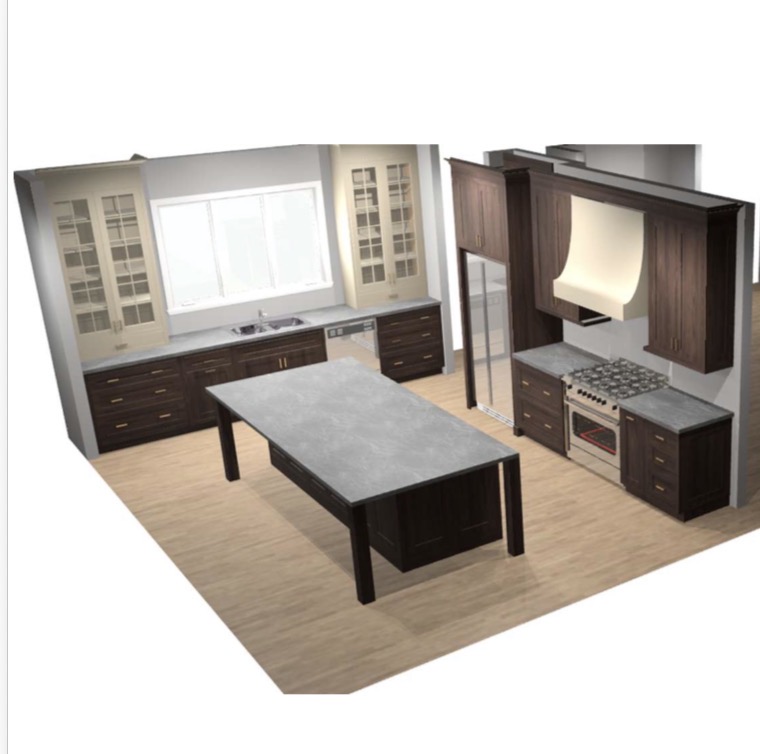
- Cabinet footprint and built-ins
- Plumbing and electrical placement
Easy to change (save here):
- Paint
- Lighting fixtures (to a degree)
- Hardware and decor
The mistake most people make? Reversing this.
3. Think in Systems, Not Single Choices
That stunning faucet doesn’t live alone. Designers ask:
- What does it sit next to?
- What undertone does it introduce?
- Does it compete or connect?
When selections are made in isolation, you end up re-buying to “fix” the mismatch.
4. Design for Your Future Self
Good design ages well—because it anticipates change. Examples:
- Blocking in walls for future grab bars
- Wider doorways that don’t scream “accessible”
- Storage that evolves with life stages
These are low-cost decisions now. High-cost retrofits later.
5. Edit Ruthlessly
Designers don’t just add—they subtract. Restraint is what keeps a home from feeling chaotic… and keeps a budget from spiraling. Not every wall needs a feature. Not every room needs a moment.

Do You Need an Interior Designer? A Practical Framework
This isn’t a philosophical question. It’s a resource allocation decision.
Bring in a Designer If:
- You feel overwhelmed by choices or second-guessing constantly
- Your project has complexity (custom build, major remodel, unique layout)
- You value speed and decision efficiency
- You want a cohesive, polished result without trial and error
Consider Going Solo If:
- You genuinely enjoy research and decision-making
- You’re willing to live with a few imperfections as learning experiences
- Your project scope is straightforward
- You have time—this path costs less money, but more hours
The Hybrid Model (Often the Sweet Spot)
Use a designer strategically:
- Space planning + layout review early
- Finish selection guidance (to avoid expensive mismatches)
- Final styling or polish
This gives you expertise where it matters most—without full-service cost.

The Bottom Line
Interior designers don’t just make homes beautiful—they make decisions efficient, intentional, and aligned. Learning to think like one won’t replace their expertise. But it will sharpen yours. And in a process where every decision has a price tag, clarity is currency.