Why We Walked Away From White Oak and Chose Walnut Instead

Some design decisions come easy. This wasn’t one of them. We went back and forth—more than once—between white oak and walnut for our kitchen cabinetry. Actually, we were totally decided on white oak. Both are beautiful and both would have worked. But they create very different spaces. And in the end, the choice came down to more than wood. It came down to contrast, mood, and how we actually want the space to live.

The Case for White Oak (And Why It Was Hard to Let Go)
White oak had a lot going for it. It’s light. It’s natural. It's so very different from the cherry cabinets we chose in 2007. It’s everywhere right now—for good reason. It brings an organic, airy feel that works especially well in neutral homes. It felt safe in the best way. We kept coming back to it because:
- It would brighten the space, especially in our north-facing kitchen
- It paired easily with almost everything
- It fit the “organic modern” direction we love
But over time, something started to feel…off.

What Walnut Did That White Oak Couldn’t
Walnut changed the tone immediately. Where white oak blended, walnut grounded. It added weight, contrast, and a sense of permanence that the space was missing. Instead of the kitchen fading into the background, it started to feel intentional. A few things clicked for us:
- The richness of walnut brought depth to an otherwise neutral palette
- It connected naturally to other darker elements we’ve planned (like black windows and accents)
- It felt more like furniture—less like standard cabinetry
It wasn’t as “safe,” but it was more us.

Avoiding a Kitchen That Felt Too Heavy
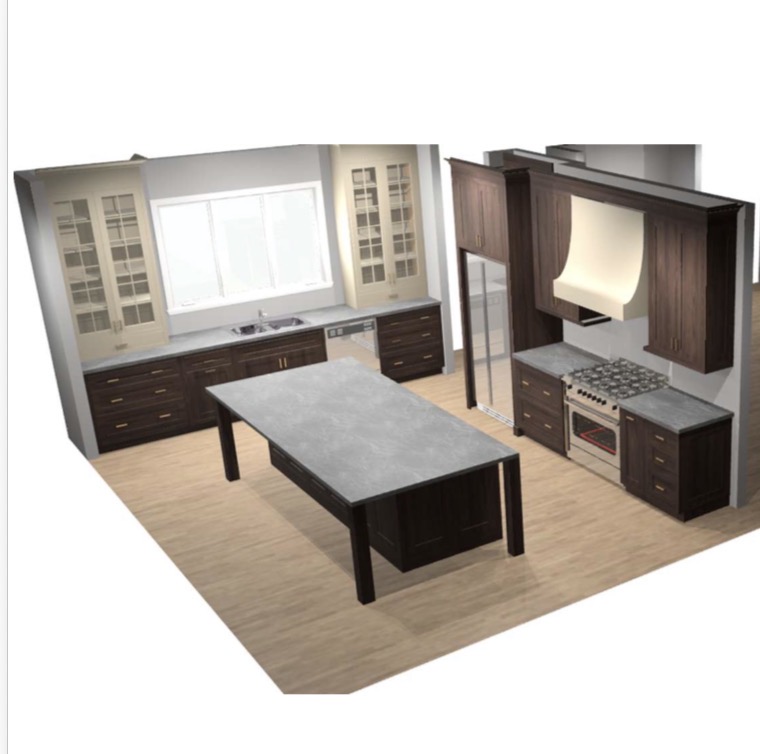
Walnut comes with a risk: too much of it can feel dark, fast. So we didn’t treat this as an all-or-nothing decision. We built in contrast. That’s where the accessible beige glass cabinets and range hood come in. Those elements do a lot of work:
- They break up the walnut and keep the space from feeling dense
- They reflect light instead of absorbing it
- They add a softer, layered look instead of a wall of wood
The mix gives us the richness of walnut without closing the room in.

Why the Mix Works Better Than Either Option Alone
If we had gone all white oak, the kitchen would have been beautiful—but quieter, lighter, and more expected. If we had gone all walnut, it might have tipped too dark. The combination gives us:
- Contrast without chaos
- Warmth without heaviness
- Interest without trying too hard
It feels designed.
The Real Decision Filter
In the end, we stopped asking, “Which one do we like more?” And started asking, “What does this room need?” The answer wasn’t more lightness. We already have that. It needed depth. Contrast. A little tension to keep things interesting. Walnut delivered that. The lighter elements balanced it. Decision made, finally.
Final Thought
Trends will tell you white oak is the safe choice right now. They’re not wrong. But safe doesn’t always mean right and we're going for timeless, not on-trend. Sometimes the better decision is the one that adds a little weight, a little contrast—and a lot more character.
*A final note: we are building with full-inset shaker-style Shiloh Cabinets in walnut with the rye stain for the majority of the kitchen, and accents of the Shiloh paint color “beige”.